Friday, 23 November 2012

Speccy


Glorious glasses! I do love them. As I said in my very first post here, my little doggy ate my favourite pair of Ray Ban cat eye glasses. That was a very sad day. I did really love those frames. But onwards and upwards! I have been on the lookout for something new for a while now. I tried on these frames in an independent opticians shop in Brighton a couple of months ago and I really liked them. More surprisingly, my husband loved them.

These are by a company called Epos Milano and the style is called Pan. This company produces quality made frames in a range of classic styles - the idea is that you shouldn't be limited by fashion trends but have something that stands the test of time - and they have a few really nice ones. I know there are lots of vintage frames out there - I have a couple of vintage cat eyes - but it's harder to find earlier styles in robust enough condition for daily wear. I think Pan has an air of the 40s about them. They really did look nice on, I looked like a bookish Miss Lemon, which is a good thing to me! They're very subtle, thin and light, so they don't over-power, which heavier frames tend to do on me.

I also tried these on, but I looked like John Lennon.

However, the cat eyes really were pretty cool.


On the website they show that you can get them in all these different coloured lenses and they do come in green tint, like sunglasses did back in the day. These look pretty authentic don't they? I'd love a pair as sunglasses (if money were no object, obviously!).


I've decided to order a pair of Pan specs though. I'm going for it. Isn't it funny that I declared quite recently that I was now into the 60s more than the 40s? Well, basically take whatever I say with a large pinch of salt. I'm now right back to loving the 40s and my little foray into the 60s didn't last very long. But I'm definitely happier to mix and match these days, I'm not concerned with doing an authentic look on a daily basis anymore (not that I ever managed to look very authentic).


here's a pair with a similar shape.

I'll post a picture when I get my new specs :)


Monday, 19 November 2012

A flapper (and Barbara Stanwyck through the decades)


I just came across these photos today and I thought there was something evocative about them, so I wanted to share.
This is a German flapper apparently called Betty Karrenbauer. She appeared on my facebook feed as I have "liked" the website Retronaut. If you're not a fan of Retronaut already, click on over and I'm sure you will be!

It says about Betty:

"This is a “Betty Karrenbauer” who lived in Darmstadt during the second half of the 1920s.

It could be a Barbara Karrenbauer who was born 21st of January in Püttlingen 1906. This Barbara K lived in Darmstadt in the 1920s, at least until 1932, where she worked as a waitress. Only 18 years old she had a baby, named Erika, out of wedlock.

But it could also be a Barbara who was born Karrenbauer, but change her surname to Daum when she got married, and also lived in Darmstadt during t
he 1920s. She became a widow in 1944 and worked as a business woman.

And that’s all I know, they don’t have any more informatione at the Hessisches Staatsarchiv Darmstadt…" 


A fantastic photo, don't you think?


It struck me that many of the images I've chosen to share on this blog have in some small way challenged gender stereotypes. Like Alice in the post below. Flapper culture very much challenged the chaste and demure image of women that had persisted through Victorian and Edwardian culture. The 20s saw a 'new woman' emerge and her trademark was short cropped hair and a much more androgynous look. I read the biography of Louise Brooks a couple of years ago and I did find it quite fascinating to read about the wild kids of the roaring 20s and what they got up to. She was such a character, Louise Brooks. 

I don't know about you, but when I look at pictures from different eras I tend to imagine the people I see as contained within their specific time bubbles. I have a hard time imagining this Betty in the 40s and 50s, she seems forever captured in the 20s, where I think she belongs. It makes me slightly sad to think of her growing older, changing her fashions, growing her hair and her hemlines... 

I see the 20s and 40s particularly as more liberating for women and the 30s and 50s as almost counter-reactions, when culture swung back in the other direction, drawing women back to hearth and home. It's quite likely that had a lot to do with the wars. I'm not a historian, but I think I might like to read a bit more about social history. If anyone has any book tips, please let me know!

On the topic of imagining the decades as their self-contained little bubbles... I came across this image of Barbara Stanwyck in the flapper era.


She's someone I associate most with the 40s. I've loved her in some films of the 40s (I have the worst memory for film titles!). 

here is pictorial evidence that she definitely didn't stay trapped in the 20s. She had a very long film career that stretched until the 1980s.

Barbara in the 50s


and late 60s

here she is in Dynasty in the 80s

This is a bit of a disjointed post, sorry about that, but that's just how my brain works.... it's always a jumble!


Monday, 29 October 2012

vintage and the revival of 'domesticity'

Sorry for the long absence since my last post, I've been terribly busy. Also, I just couldn't really seem to get down to writing anything. However, I'm currently writing some lecture material about 'home' and it got me thinking about the relationship between the 'retro revival' and a return to a new kind of domesticity. I'm writing this lecture material about the development of the modern home since the industrial revolution and what this has meant for gender relations within and outside of the family home.

When it comes to WWII, as we all know, it radically changed the role of women in the public sphere of production in the UK, US. Women were doing the jobs traditionally done by men and enjoyed a new kind of freedom while the men were away at war. Adverts created during the war years were aimed at encouraging women to go to work for the war effort.

Australian war poster

US war poster
UK war poster

Familiarly, this all changed once men came back from the war and the 1950s saw a real return to the earlier 'domestic ideal' for women. Advertising in the 1950s is notorious for its sexist depiction of women as either decorative objects or domestic 'angels' looking after hearth and home by cleaning, cooking and child rearing with a happy satisfied smile.


Of course this is a bit of a simplistic picture, women did never completely acquiesce to this 'domestic ideology' which had a strong presence in popular culture since Victorian times. Women were always more complex and interesting than this and that should not be under-estimated. However, the media image of women was conceived within the very narrow confines of what was deemed appropriate expressions of 'femininity'.

In 1963 Betty Friedan wrote her famous 'The Feminine Mystique'. If you haven't heard of Betty Friedan before, she was a big name in US second-wave feminism and central to the feminist critique of 'domesticity' as the ultimate enemy of the emancipation of women from the 'private sphere'.

Betty in Junior High School (from here)
Betty wrote the famous words:

As she made the beds, shopped for groceries, matched slipcover material, ate peanut butter sandwiches with her children, chauffeured Cub Scouts and Brownies, lay beside her husband at night, she was afraid to ask even of herself the silent question – ‘Is this all?’
(Betty Friedan, the feminist mystique, 1963)

Friedan as young (from here)

Of course, second-wave feminism received much critique in the 1990s (when it transitioned into the so-called 'third wave') for its essentialised view of femininity and its supposedly unified feminist cause. It's lack of attention to difference, diversity and change has been addressed since and it's been recognised that the home isn't necessarily either a prison or a haven, it's different things to different people, in different circumstances and parts of the world. However, it's interesting that in the last few years, the revival of retro and vintage has lead to a revival of a certain image of 'cuddly' domesticity a' la the 50s.

A revival of domesticity hasn't just bee reconcieved n confined to the 'vintage brand', but can be seen elsewhere in contemporary popular culture. The contemporary 'luxury housewife' (WAG culture etc.) has little resemblance to the 50s housewife, but it's interesting to note how the image of the housewife has changed in certain circles. Not that there isn't still a lot of contempt out there as well (especially for WAG-style housewives). However, the 'vintage' style version of domesticity is very different from this type of luxury 'women what lunch' phenomenon. It's much more wholesome, cosy, cup-cakey and inspired by both a 'make-do-and-mend' thriftiness and a novelty cheese-cakey version of domestic femininity. And perhaps something else, an interest in recapturing something that's been lost; a sense of creating something a little more 'authentic' in this world of takeaways, ready-meals and throw-away consumption.
 
Dita in her kitchen (I do really like her)

There are of course different theories about what has caused this revival of past domestic ideals, such as the idea that it is a reaction to a "financially unsure, sped-up, tech-obsessed 21st century world" (Emily Matchar, check out her interesting blog here).


In the course of writing this blog post I did some googling and I found Emily Matchar's blog 'New Domesticity'. I have only just happened upon it and haven't had a chance to read very much, but it does look very interesting and right on point for what I wanted to talk about in this post. As it happens, she talks about it much more eloquently, so do check it out if you're interested in these issues. She's also written a book which is due to be published in the spring.

But what do we think of this cup-cake domesticity linked to a vintage aesthetic and morality, as people who (presumably) are enthusiastic about vintage in a broader sense? By that I mean, not just enthusiastic about rekindling a love for the home-making practices of the past but about other aspects of social and fashion history. How do you feel about the cup-cake image of vintage?

The vintage revival is of course so much more than just about cup-cake baking and cheese-cakey posing. This is just one version of 'vintage', a version that's closely tied to a new form of anti-consumption/anti-mainstream consumption. This kind of vintage is little more than a marketing coop. But the broader trend in looking towards more traditional models of femininity is interesting for other reasons.
"We might ridicule the gender constrictions which marked the ’50s and ’60s, but the success of Mad Men, among other backward-looking phenomena, suggests that they also speak to some part of ourselves that doesn’t want to construct a working model of femaleness from scratch each day. I can’t be alone in sensing a withdrawal from embattled agendas of self-definition, especially among younger women, as well as a renewed interest in traditional modes of femininity…” (Daphne Merkin in Elle, cited in this blog post)
But this new appropriation of old-fashioned femininity in the retro/vintage world can seem pretty tame in terms of making a statement about what it is to be a woman in the 21st Century:

"Twee and retro have been seeping into feminism for a couple decades now, gaining potency. It’s all about cute dresses, felten rosettes from Etsy, knitting, kittens, vintage lamps shaped like owls, Lesley Gore. And yes - a lot of cupcakes" (Meryl Trussler, here).

I have myself been guilty of most of the things mentioned in the quote above (if not so much the cup-cakes), as have probably most of us. These things are to some degree a part of the vintage 'scene', even if they are at the commercialised edges of that scene. 

This is a bit of a tangential issue, but something interesting occurred on Sunday. My husband and I went to a local pub for a Sunday roast and as it happened, the pub hosted a craft fair that day. One of the stalls sold "vintage" (in big scare quotes), or rockabilly maybe, plastic brooches in the shape of swallows and pin-up girls. On my first round I just walked past - it's not really my thing, even if I do like a bit of kitsch - but before I left I found myself stopping at the stall again and before I knew it, I'd bought a darn swallow! I think it was partly not wanting to leave empty-handed, but it made me feel so predictable and quite gullible as the salesgirl smiled at me - the typical 'retro-lover' who of course wants to buy one of her swallows. Oh heck, sometimes you just do fall for these things and we shouldn't beat ourselves up about it too much. 

Neither do I want people to feel berated if they happen to be regular cup-cake bakers. But I do think we should think about the things we take onboard as part of our construction of a self-image, and why.

To be continued...


Friday, 5 October 2012

An inspiring woman, an inspiring take on vintage style


photo from G.L.U manazine


This is just going to be a short post, but a worthy one I think. I came across this woman while perusing the Advanced Style blog (which is always inspiring by the way) and I think she's an inspiration for a number of reasons, but not least because of her use of vintage in a really expressive and unique way (a very cool way, I think). She's an interesting counterpoint to the average "vintage girl" because her style is neither formulaic or adherent to a normative feminine ideal.

Meet Alice Carey.


photo from Advanced Style, in her mother's deco dress


She has a wonderful gender-defying style, reinterpreting menswear as womenswear, and wears her hair reminiscent of a boy scout back in the day. She also has the most enviable collection of bakelite jewellery!

photo from Advanced Style, wearing a vintage men's jacket


photo from Advanced Style

photo from Advanced Style


Her mix of masculine and feminine details I find really striking and very interesting. She says in a Huffington Post blog entry that she learned to imitate James Mason's (an English actor) voice when she was young, she writes 'Male, low, seductive, James Mason's. His voice suited the girl I wanted to be'.

photo from Advanced Style


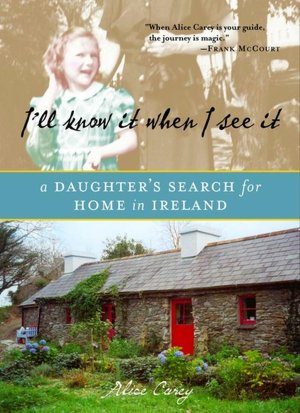
Alice Carey emigrated from Ireland to New York as a young girl and has lived in Greenwich Village ever since, but also has a home in Cork. She is a former teacher and musical theatre performer and currently a writer. She has written a memoir titled I’ll Know It When I See It – A Daughter’s Search For Home In Ireland. I haven't read it but I would like to. I can imagine that she has an interesting story to tell.


photo from Advanced Style, look how she's wearing those dress clips on her shirt

with her husband George Knox. Photo borrowed from Femme et Fleur (< btw, this is a wonderful blog too!)

I don't really know anything else about this intriguing woman, because there isn't a lot out there in the googlesphere. Don't you think that, for us vintage enthusiasts, she adds something interesting to the mix? She certainly doesn't attempt to do 'authentic' vintage style, she takes her love for old things and does something completely individual with it. 


Perhaps I'm liking this especially much since I've lately given up on the hunt for that 'authentic' look, which I don't think I ever fully achieved. It was frustrating and actually, I enjoy being a little more free in my choices now. I still cringe a little inwardly if I mix a 40s dress with a 60s jacket, so it's probably a bit of a process before I feel totally happy mixing up my vintage, but I feel like I'm increasingly getting to a place where I'm finding new ways of appreciating vintage, and I'm feeling more and more liberated in the way I put things together. You know, I've come to accept the fact that searching for a style (or whatever) that feels authentically me, is absolute rubbish. Of course I accepted this on an intellectual level years ago, the fact that there isn't some elusive internal and ghostly "self" waiting to be uncovered and accurately represented outwardly through dress or behaviour or whatever else. But on a commonsensical level, I've sort of still been fooled into having this desire for "signature" things, like a signature sense of style, a signature scent, "the bag that I'm gonna want to carry for the rest of my life", etc... I know, really stupid. I think I had the same trouble with vintage, I was wrong in thinking that I had to pick just one era, one style, and make it really synonymous with who I am. Of course I don't. Last year I was really into the 40s and wanted to dress as authentically 40s as I could (considering my limited means). This year I'm much more into the 50s and 60s, and more comfortable with mixing it up a little. But having learnt my lesson, I am not selling all my 40s dresses on eBay like a total numpty, I'm just hanging them to one side of my clothes rail and concentrating on building on a different part of my wardrobe. Because I know that sooner or later I'm going to be really into the 40s again. Or perhaps care less about mixing a 40s dress with a 60s coat, if it works for me that day.

Has Alice Carey inspired you? Do you think vintage style could be pushed in more interesting directions?

Monday, 1 October 2012

"If you're tired of style, you're tired of life"

Do you recognise the quote? If you've seen the second episode of the new series of Downton Abbey, you might remember Carson said these words in response to the family being tired of putting on the 'show' of the formal dinner. The quote really struck me at the time and I kept thinking back to it for a couple of days. Having style and being stylish is something that vintage enthusiasts talk about quite a bit, but what does it mean to have style and why do we often say that people in the past had more style?


An obvious element is of course the fact that in the past people followed much stricter dress codes and there were strong conventions guiding what people wore, and when and where they wore it. These sorts of conventions still exist but have been relaxed quite a bit. There was also a much stronger sense of conformism when it came to styles of dress. Perhaps at the time, with the small (but probably significant at the time) seasonal changes and trends, it would have been clear who was at the cutting edge of fashion and who was wearing a style from three seasons ago. To us, now, these small changes are hard to spot and date (unless you're really trained in fashion history). Looking back it's easy to think it was all just really stylish, that everyone had great style and always looked their best. It's quite rate that I see vintage clothing from the 40s or 50s that I think are 'bad style'. I'm not sure if I ever have actually, which is funny considering that I'm sure women at the time would have had very strong opinions on different cuts, patterns and designs. When it happens it's usually an 80s dress in disguise (sometimes by unknowing eBay sellers! Or knowing ones for that matter, tsk tsk). Perhaps this is because it's hard to be really discerning when a dress in good condition, in your size and for an affordable price doesn't come along every day! Or perhaps my enthusiasm for absolutely any 40s or 50s dress (or at least most!) is more of a characteristic of a hobby and general fascination with a period in history than just a desire to dress well.

What made me think about the question of style though, was what struck me as an interesting dichotomy between the way we view past dress sense and the fact that dressing well at the time was to a larger extent than now about conforming to cultural guidelines and expectations, set by social status, class and position and the social occasion. How much would the ladies of the 40s/50s frown at some of our outfits and love for over-dressing and flair on the most average of days? I'm sure what a lot of us love about vintage is the opportunity to add a bit of flamboyance and dressyness to ordinary life. Not forgetting that dressing vintage is the sign of a subculture today, that dressing in vintage head to toe is a statement about not situating oneself in the mainstream, which makes the way we consume vintage fundamentally different from how people consumed fashion back in the day.


Style for me is daring, having the confidence to be flamboyant and break the mould a little bit. The blog Advanced Style is a great example of this kind of definition of style. Joyful daring and zest for life. Style is a performance, and the best kind of style I think has nothing to do with vanity or trying to conform to normative standards of beauty, it's pure unselfconscious aesthetic enjoyment.
I don't want to suggest that people with no interest in style aren't living properly or don't have a zest for life, perhaps the difference lies in how aesthetically or visually oriented we are. I for one love beautiful things, or things that are quirky and interesting and it makes life more colourful, but I also enjoy things that push boundaries and are subversive.


What is eroding my enjoyment with vintage a little bit lately is how much it is creeping into the mainstream. The promotion of the 'vintage brand' is tiresome and feels like a cheapening of what I enjoy about vintage. Remembering that subcultural style depends on contrast to the mainstream, the popularity of "vintage" - in the form of cup-cakes, excessive pastelly polka dots, vintage styles flooding the highstreet and all the fake ageing of shabby chic paraphernalia - is eroding the subcultural 'power' of real vintage, since it doesn't have a clear distinction from the mainstream 'vintage marketing machine'. Maybe we don't all want to wear vintage to make a conscious statement or feel like we ever belonged to a subculture (I know many, like me, have very few 'real life' friends who are into vintage), but I know that many who are into dressing in vintage have a background in other subcultures (goths, punks etc.), so obviously enjoy the aspect of being different as well as have a genuine interest in vintage and social history from the period.

What do you think: What is special about vintage style to you and do you feel like vintage style is compromised by its filtering into mainstream fashion trends?


all images from google.

Sunday, 23 September 2012

Welcome to Lina (the Retrophile) writes!

Hello folks,

If you followed me during my previous blogging venture you will know that it's been a while since I've posted anything on this here intraweb. I simply lost interest in keeping the old blog going, or rather started to feel like it wasn't a good reflection of who I am, or at least who I want to be. I was longing to be a little more serious, I suppose. Reflect a little more, write a little more about socio-cultural and political aspects of retro style, both now and in the past. I am an academic after all. Researching, reading and writing is what I do and I suppose it's difficult to stop and not intellectualise over something that interests you. I think the first blog originated as a way to avoid all that intellectualising, actually. I was in the final year of my PhD when I started, and to be honest, bloody tired of being intellectual. I wanted to enjoy my interest in everything retro and vintage without having to think too deeply about it, analyse it in all its aspects or try to distance myself from this interest and risk seeing it as some sort of sign of the times and feel like another fool who has fallen subject to a more wide-spread reaction to the socio-political conditions of the recession.  But trying to isolate my interest in vintage and retro style and 30s/40s/50s history from any deeper pondering didn't work in the long run! Also, I think it has something to do with feeling so much more secure in my aesthetic choices and reference points, I don't feel like this interest and my retro leanings are threatened by any intellectualising anyone (including myself) could do about them. I don't feel like I have to defend myself, or explain myself either for that matter. And I am also not worried about feminists patting me on the head or accusing me of setting the cause back by 70 years by embracing a traditional femininity. I'm not sure who these feminists were supposed to be, and it's not like I don't also regard myself as a feminist, I do, but admittedly I'm not much of an academic feminist, as in drawing or furthering feminist academic theory in my work, or in fact that gender features very strongly in my work, but there you go, maybe that will change in the future at some point. However, I'm hoping to muse a little about those questions that seem to come back again and again in the vintage blogging community, which include questions about the relationship between vintage and retro style that emphasises a traditional version of femininity and contemporary feminism. Well, at least add my take, or muse about others' takes, I'm not saying I'll have anything definitive to say about anything much at all. In fact, I'm sure this blog will be just as self-indulgent as the last one in its own way! Rather than lots of pictures of myself (there will still be a few to be sure), this one is a little less "look at me" and a little more "listen to me ramble on", I'm not sure which is worse, but you can make up your own mine about that.
Before I go on too long, abut my I've started this new blog, let me ramble just a little about glasses.

Framing my eyes

So, the other day, when I was still bleary eyed (probably quite a bit hungover actually!), my dog got hold of my beloved Ray Ban cat eye frames and chewed them up beyond repair. He even put a fang straight through the lens on one eye. The arms are chewed into a lumpy mess. So, at first I was really upset, my faves were broken! When the sorrow dissipated a little I started seeing it as an excellent opportunity! An excuse to acquire another pair of fabulous frames.
I already have two pairs of vintage cat eye frames, in addition to the now ruined Ray Bans. I'm not exactly in dire need. But just look at the cobra print on these! I didn't say this new writerly blog was going to be less interested in the gaily frivolous (just more long-winded about it).


My Ray Bans that are no more.

Looking at those Ray Bans though, makes me think I need to just bite the bullet and get another pair, because I think they suit me. However, the cobra print, rounded ones are so tempting now that my hair is also no longer that very dark brown anymore. Yes, things have moved on while I've been hiding off-line. I had to come to the uncomfortable decision to stop dyeing my hair, because it was getting thinner and thinner. I did some googling and reading and affirmed what I thought was happening. My hair was falling out and thinning as a reaction to the hair dye. Apparently this is quite common and easily remediable, all you have to do is stop dyeing your hair. Ta-da, it grows back again, just like before. So, my hair is as good as new, I'm no longer worrying about it being really thin and showing scalp if I scrape it back in a ponytail. It's such a relief, but feels very strange, after all I have been dying my hair monthly for about 17 years now. I didn't really know what it was going to look like, but unfortunately it is just as mousy as I feared it would be. It's quite a fair light-brownish/dirty-blondish sort of colour, typically Scandinavian like me. Well, it hasn't been that long, so it's half/half actually. Which is why it's always put up with a barrette, or in a ponytail. It's bob length now so it's a very small ponytail, which sort of makes it better somehow in my opinion. I'm trying to embrace this as much as I can, but it's certainly not the sign-post for vintage style that I find very dark brown or black hair can be. Or, I suppose, platinum blonde.

Where is the pin-up for mousy hair? Who is going to do for mousy hair what Dita has done for black? I might have to wait a very long time for that sort of mousy role model, but in the meantime, do you think these cobra frames would make mousy cool?